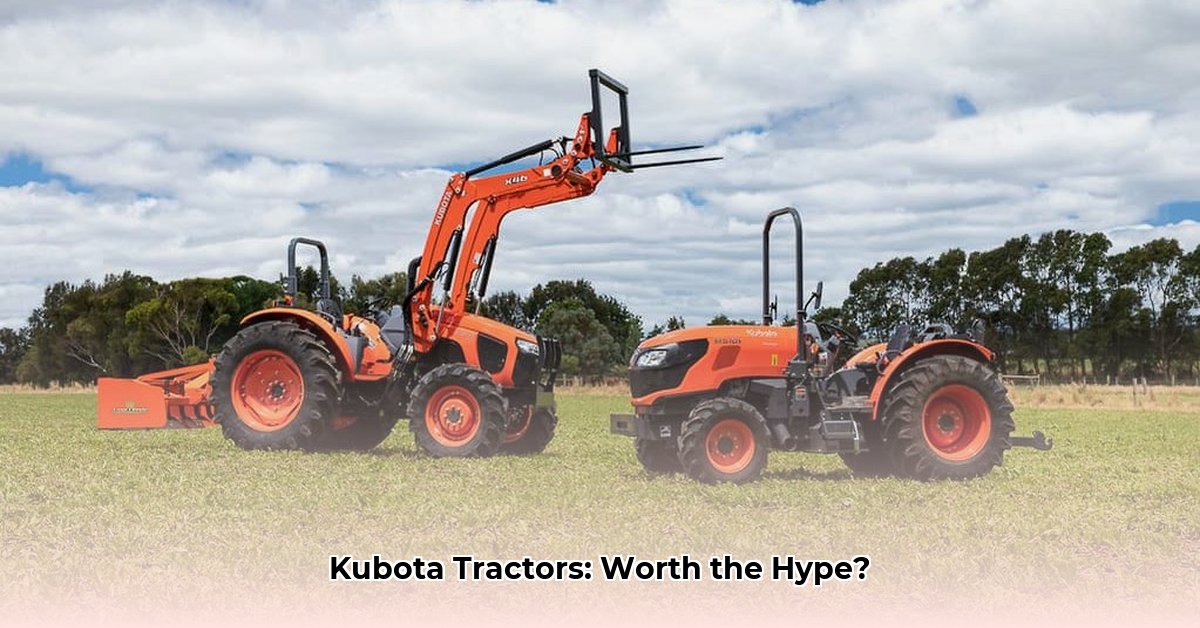
Choosing the right tractor is a critical investment for any farmer, particularly those prioritizing sustainable agricultural practices. This review examines Kubota tractors, assessing their suitability for sustainable farming based on available data. We'll explore their strengths and weaknesses, highlighting areas where more research is needed. For Kubota maintenance schedules, see Kubota maintenance.
Fuel Efficiency: A Promising Area Needing Verification
One frequently cited advantage of Kubota tractors is their fuel efficiency. Anecdotal reports from farmers suggest impressive fuel economy, leading to lower operating costs and a reduced carbon footprint. This aligns well with sustainable farming goals. However, it's crucial to note that these claims require substantiation through independent, verifiable testing before being considered conclusive. Comparative studies against competitor brands are also essential to determine if Kubota's fuel efficiency truly offers a significant advantage. Is Kubota’s advertised fuel efficiency truly reflected in real-world farming scenarios? Further investigation is necessary.
Operator Comfort: Enhancing Productivity and Well-being
Operator comfort is a significant factor impacting farmer productivity and well-being. Kubota tractors are often praised for features designed to minimize operator fatigue during long working days. These include features like air-conditioned cabs and ergonomic designs. While these features contribute to a positive user experience, quantifying their direct impact on overall productivity and long-term health requires further research. How much does improved operator comfort translate to increased yields or reduced operational errors? This area needs more rigorous examination.
Reliability: A Critical, Yet Under-Researched, Aspect
Reliability is paramount in agriculture; downtime directly equates to lost revenue and crops. While some sources suggest Kubota tractors possess robust engines, verifiable data supporting these claims are currently limited. Independent assessments of mean time between failures (MTBF) and long-term maintenance costs are essential to fully evaluate Kubota's reliability compared to its competitors. Lacking this data prevents a complete evaluation of the long-term viability of choosing a Kubota tractor for sustainable operation. How many hours can a farmer realistically expect from a Kubota before significant maintenance is required? This is currently unclear.
Sustainability: A Broader Perspective Beyond Fuel Efficiency
Sustainable farming requires evaluating environmental impact beyond just fuel efficiency. The entire life-cycle of Kubota tractors needs scrutiny. This includes greenhouse gas emissions during manufacturing, the recyclability of components at the end of the tractor's useful life, and the overall resource footprint of the production process. Currently, data in this area is insufficient for a full assessment. Is Kubota actively working to reduce its environmental impact through sustainable manufacturing practices? Transparency in this area is critical for a complete evaluation.
Comparative Analysis: The Need for Head-to-Head Testing
Currently, drawing definitive conclusions about Kubota’s position in the tractor market remains difficult due to limited comparative data. Independent benchmarks comparing Kubota tractors against major competitors on key metrics—horsepower, maintenance costs, lifespan, and overall sustainability—are urgently needed. Direct comparisons are essential to determine if Kubota genuinely offers superior value or if alternative brands might be more suitable based on specific farm requirements. How does Kubota’s total cost of ownership compare to John Deere or Massey Ferguson models performing similar tasks?
Risk Assessment Matrix: Identifying Potential Challenges
Before investing in any farm equipment, risk assessment is crucial. The following matrix summarizes key considerations and potential mitigation strategies:
| Factor | Probability of Failure | Impact of Failure | Risk Level | Mitigation |
|---|---|---|---|---|
| Engine Reliability | Moderate | High | High | Extended warranties, preventative maintenance |
| Fuel Efficiency Claims | Moderate | Moderate | Moderate | Independent verification of fuel consumption data |
| Customer Service Response | Low | Medium | Low | Research customer reviews and dealer support availability |
| Environmental Impact | Moderate | High | High | Investigate manufacturer's sustainability initiatives |
Conclusion: The Call for More Data and Transparency
Determining if a Kubota tractor is the right choice for sustainable farming currently lacks the necessary comprehensive, independent data. While aspects like operator comfort and potentially fuel efficiency appear positive, information regarding long-term reliability and overall environmental impact remains insufficient. Further independent testing, transparent reporting from manufacturers, and more comparative studies are necessary to allow farmers to make truly informed decisions. This collective effort will ensure that sustainable farming practices remain at the forefront of the agricultural sector.